
It’s fair to assume when watching a movie from the 1950s that certain elements will be out of date. Whether it’s in how a film from this era approaches gender or even a character declaring that the United States of America is comprised of just 48 states, there are usually apparent telltale signs of what decade these films came out. But that doesn’t mean 1950s cinema works exclusively as an artifact of the past. Billy Wilder’s 1951 masterpiece Ace in the Hole, for example, feels just as powerfully relevant today as it did in its initial release. Rather than being hopelessly dated, Ace in the Hole is a cautionary tale we still haven’t heeded.
Ace in the Hole concerns Charles Tatum (Kirk Douglas), a newspaperman who’s been run out of his previous cushy jobs for a string of discretions ranging from a libel lawsuit to getting cozy with an editor’s wife. He arrives in a small New Mexico town promising the local editor-in-chief that he’ll work cheap as he hopes to score a big scoop that can instantly catapult him back to his previous high stature in the journalism world. Cut to a whole year later and Tatum is no closer to regaining his reputation than when he first walked into this dusty backdrop.
Behind his desk, Tatum begins to rant to his co-workers about how much he’d kill for something, anything, to happen in this backwater town so that he could write a sensational story on it. Here’s where Ace in the Hole establishes the hauntingly realistic issue at the heart of its story; people who put the livelihood of others at the expense of their own self-gain. Tatum is salivating at the idea of some terrible event occurring so that he can prosper financially. It doesn’t matter who gets hurt, how they get hurt, or the lingering consequences. All that matters to Tatum is being a famous reporter again.
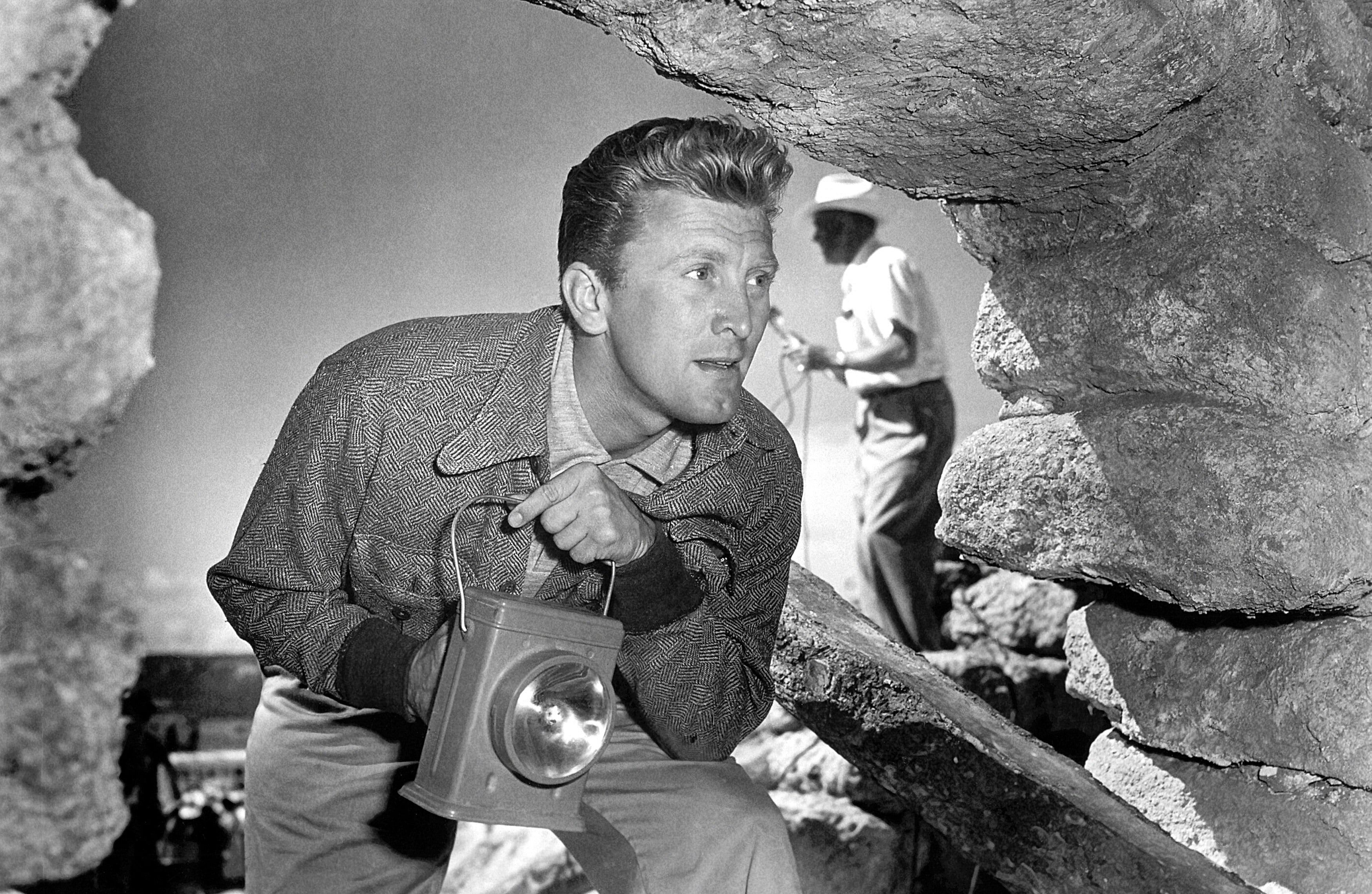
On his way to cover a rattlesnake event in a nearby town, Tatum learns of the plight of Leo Minosa (Richard Benedict), a man trapped in a cave after digging for old artifacts. It’s a brutal situation, but one that could be rectified in a matter of hours if handled properly. However, Tatum, having stumbled onto this incident before most other people, gets an idea. Tatum’s gonna milk this event for all the publicity it’s worth. He’s going to drag out the rescue mission for days on end to ensure he can have countless front-page stories to write. In the eyes of Tatum, the misery of Minosa is his golden ticket to career resurrection.
Watching Tatum exploit the suffering of a man for personal gain, it becomes apparent Ace in the Hole was a harbinger of things to come. We now live in an era of Fox News anchors and podcast hosts spreading misinformation about everything from the COVID-19 pandemic to racial politics in America to keep their customers coming back for more. Rather than using their enormous influence and power to help people or spread useful information, they offer dubious remedies for viruses or other falsehoods. Such figures can even go so far as peddle notions about how the deaths of children in school shootings were “fake” to help boost their own fear-mongering conspiracies about “big government”. Conflict generates ratings, and the longer the conflict goes on, the higher the ratings.
In the process, these kinds of people ensure their ratings will shoot through the roof. They’re playing to what the people want to hear, sensational anguish. At the same time, they also exacerbate the misery of others. Lying about masks or the validity of COVID-19 vaccines has done untold damage to the human race during the pandemic, and that’s just one of the many ways these kinds of fraudulent news figures have let down humanity over the years. Like Tatum, these news personalities may not even believe the words that come out of their mouth, but they sure do believe in all the riches that can come from behaving like this.
The enduringly timely exploitation of Minosa in Ace in the Hole is all the more rotten and tragically relevant due to how Tatum tries to play himself as just one of the people while engaging in his charlatan behavior. This is particularly true when Tatum talks to Minosa and feeds him lies with a warm voice about how he’s going to get out safely and that he only has this trapped man’s best interests in his heart. One can’t help but shudder to think of the modern parallels to podcast hosts who soothingly reassure their listeners they think the world of them while feeding them advice that puts these listeners’ lives in jeopardy.
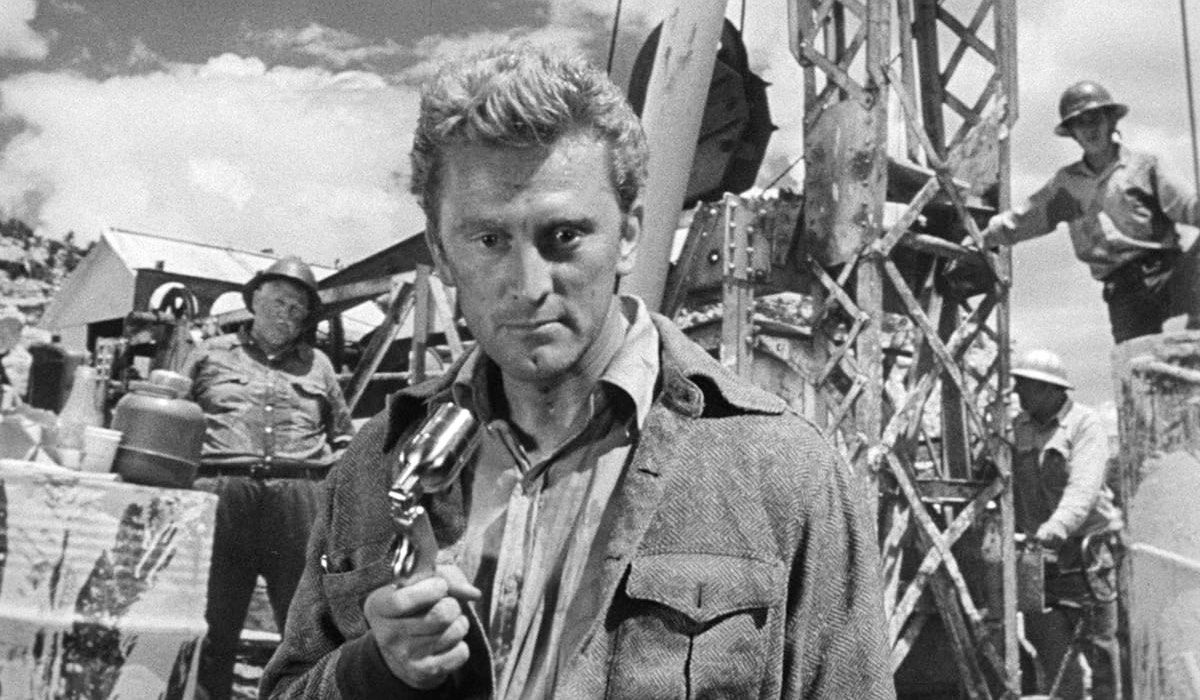
Ace in the Hole smartly refuses to depict Tatum’s behavior as an aberration in society. The onlookers who come to gawk at a man trapped in a mine, for example, are more obsessed with being recognized as the first tourists to arrive on the site than for the safety of the man whose life is in danger. And then there’s Sheriff Gus Kretzer (Ray Teal), a political official who sees this entire event as a perfect chance to stir up support for his re-election campaign. Working with Tatum directly, Kretzer supports a ludicrous scheme to retrieve the trapped man, with the only advantage to this plan being that it’ll give Kretzer more time to further solidify himself as a trustworthy person to the general public.
Kretzer’s determination to put his own political needs over the safety of the people was first released to the public in 1951, but it feels like a direct commentary on the way politicians in 2021 respond to among other tragedies, the COVID-19 crisis. Poll numbers become the focus, not how to actually help people. Meanwhile, a scene where Kretzer forces a construction worker, who’s insistent on using a quicker method to retrieve the trapped man, on following his orders by threatening his job shows how this kind of behavior just keeps enduring in society. Just as true today, as it was in 1951, is the fact that, when you’ve got all the power, you can manipulate people to do anything you want.
This proclivity for putting power over the well-being of others runs rampant throughout the entire cast. Even plucky young photographer Herbie Cook (Robert Arthur), who previously had a heart of gold, goes along with Tatum's deceit at the promise of there being great personal rewards for him on the other side. Ace in the Hole is determined to show how powerful people we trust to help during times of crisis (like journalists and politicians) can easily be swayed by their own wants, but it's also conscious that this trait isn't limited to just those pockets of society. It can appear anywhere, hence why so many average citizens are willing to go along with Tatum's scheme to exploit Minosa for all he's worth.
Tatum doesn’t care about the consequences of his exploitation, Kretzer’s working for him and helping his goals, that’s all that counts. There’s only one place all this self-serving ideology can lead and Ace in the Hole doesn’t hold back in depicting the inevitably grim outcome of this outlook. Minosa eventually perishes under there solely because of Tatum stretching out the rescue mission for so long. Once this happens, Tatum has a change of heart, but Wilder commits to the grim tone of the film by not having this shift in perspective suddenly change everything.
Even after realizing the horrors of what he’s done, Tatum doesn’t earn back his life, he’s now hit total rock bottom. To boot, there is no comeuppance for the people who collaborated with him, no scene where Kretzer gets called out and dressed down for his misdeeds. By the end, the powerful are still powerful, the only change now is that Tatum is cognizant of what a warped world he’s contributed to. Ending on Tatum collapsing to the floor, begging his New Mexico editor to let him work for free, Ace in the Hole has shown the inevitable conclusion to all this treachery. If only we had heeded its lessons instead of digging society deeper and deeper into chaos motivated by selfishness.
from Collider - Feed https://ift.tt/2XpPHgj


